Insights / No. 09
Community Arenas vs. Major Venues: Why Smaller Rinks Are an Underpriced Media Channel
Major venues get the sponsorship budgets, but community arenas reach families week after week. Learn why local rinks are an undervalued media channel and how data changes the pitch.
5 min read
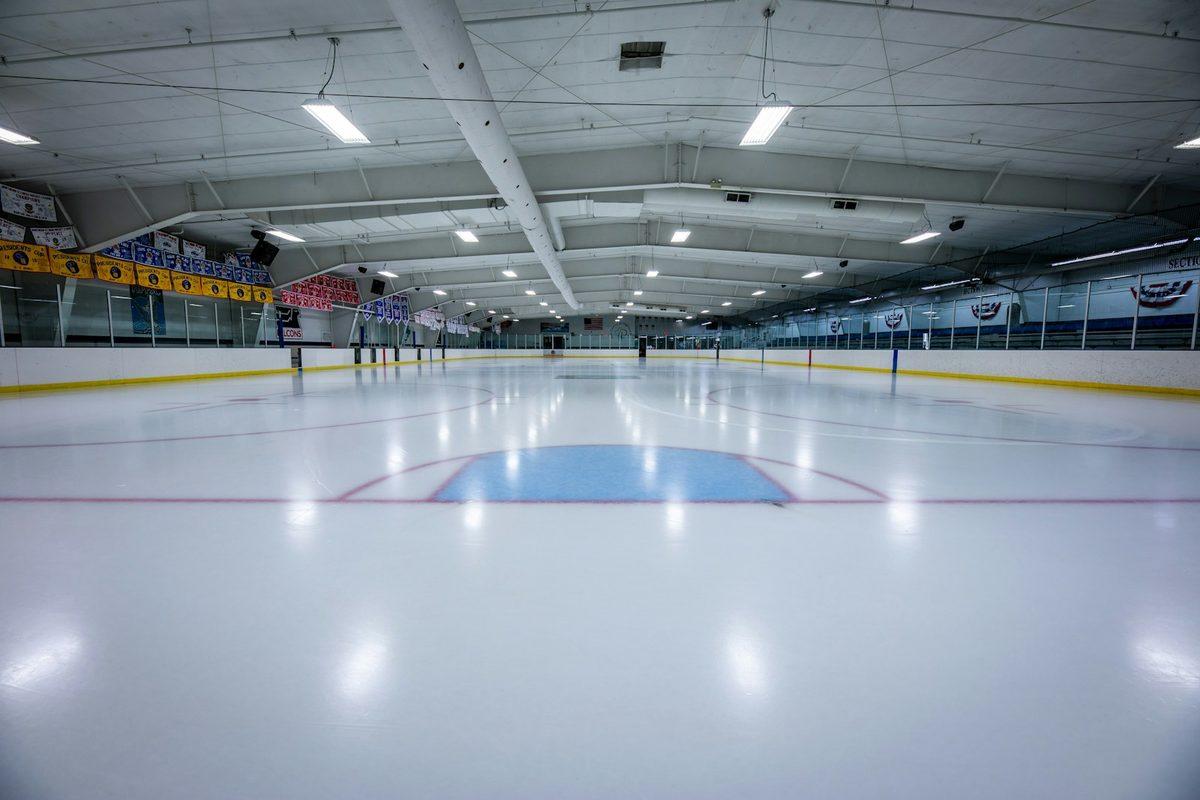
When marketers think about arena sponsorship, they picture a downtown NHL building: a packed lower bowl, LED ribbon boards, a broadcast audience, and a price tag to match. That kind of venue earns its premium. But it represents a small slice of the actual arena activity in any Canadian province.
The rest happens in community rinks. Single-pad municipal arenas, twin-pad recreation centres, multi-pad complexes on the edge of town. These buildings host house league at dawn, rep hockey on weeknights, figure skating, ringette, adult leagues, public skating, and tournaments every weekend from September to April.
Collectively, they reach an enormous, loyal, family-heavy audience. Individually, they are often sold for little more than the cost of printing a board. That gap between reach and price is why community arenas are one of the most underpriced media channels available to brands today.
The scale of community hockey
Ontario alone has more than 700 arena locations. In 2025, Arenalytics analyzed more than 20 million visits to them from over 4.6 million unique devices, and the same picture can be built for community arenas anywhere in Canada. Much of that activity takes place in community and municipal facilities, not major league venues.
The numbers that matter are not just the totals but the pattern behind them:
- Repeat visitation. A minor hockey family can be at the rink several times a week for seven or eight months.
- Long dwell time. Practices, games, and tournaments keep visitors in the building for an hour or more, often longer on weekends.
- Predictable schedules. Ice-time is booked months in advance, so traffic is unusually forecastable.
- Local concentration. Visitors largely come from the surrounding community and region, which suits brands with local or regional footprints.
A downtown venue delivers a large audience a few dozen times a season. A community arena delivers a smaller audience, but the same people, again and again.
Why community rinks are underpriced
If the audience is this valuable, why is the inventory so cheap? Several structural reasons keep prices low.
No measurement, no pricing power
Most community arenas have no audience data at all. There is often no ticketing system, no turnstile count, and no broadcast. Without numbers, a board is priced like a donation rather than a media buy. Sponsors pay what feels reasonable to support the local association, not what the audience is worth.
Fragmented sales
Advertising in community arenas is typically sold building by building, often by volunteers, municipal staff, or local associations. A regional or national brand that wants to reach families across dozens of rinks has no simple way to buy them. Fragmentation keeps demand local and prices low.
The wrong comparison
When community arenas are compared with major venues, they lose on every traditional metric: capacity, broadcast reach, and prestige. But those are impression-based measures. On metrics that matter to many sponsors, such as frequency, dwell time, family composition, and local purchase behaviour, community rinks often compare well.
Perception
Rink advertising has a reputation as a local goodwill purchase. That framing undersells it. The same audience reached on a social platform or streaming service would be priced as a valuable, targeted segment.
What community arena audiences look like
Audience data turns the anecdotal case into a measurable one. Mapping arena visitors against thousands of points of interest shows that these audiences are commercially active across everyday categories.
Everyday spending
Coffee and quick-service restaurants are part of the routine. Early practices and long tournament days put arena families in drive-throughs constantly. Fuel and convenience, grocery, and banking show up in their weekly routines too.
Retail cross-shopping
Retail overlap is measurable and specific. An analysis can show what share of arena visitors were also seen at a particular retailer, which lets a brand assess fit before committing.
Proximity
Community arenas tend to sit in the middle of everyday commercial life. Proximity analysis shows which of a brand's locations sit within a few kilometres of each rink. For quick-service, fuel, and retail brands, the rink is often a few minutes from their own locations.
How data and networks change the economics
Two things close the gap between reach and price: measurement and aggregation.
Measurement gives each rink a story
Once an arena knows its visit volume, trade area, and category affinities, it can price inventory against an audience rather than a feeling. A local auto dealer, grocery store, or credit union can see where visitors live and what they buy, and the conversation moves from "support the rink" to "reach your customers."
Networks give buyers scale
Grouping community arenas into a network lets a regional or national advertiser buy dozens of rinks in a single plan. Digital screens in lobbies and concourses make that practical, with centrally managed creative and scheduling.
Networks can be measured too. Comparing visitor behaviour at networked arenas with arenas outside the network tests whether consistent, managed in-venue media adds value beyond a static board.
Digital extension adds reach
Community arena audiences can be extended beyond the building. Anonymized arena visitors can be activated through mobile advertising, postal-code geographic targeting, and household-level connected TV. A sponsor gets the in-rink presence plus the ability to reach the same families at home.
Who benefits most
Some brands are a natural fit for community arena media:
- Quick-service and coffee brands, given how naturally the category fits early practices and long tournament days.
- Automotive dealers and service centres, since hockey families drive constantly, often long distances, in all weather.
- Home-improvement and hardware retailers, where cross-shopping is already measurable.
- Sporting goods and apparel, with an audience that buys equipment, skates, and seasonal clothing.
- Grocery, banking, insurance, and telecom, all of which want to reach families making household decisions.
- Local and regional businesses, whose customer base sits inside the arena's trade area.
What operators and associations should do
For municipalities, operators, and minor hockey associations, the path to better sponsorship value is straightforward:
- Get baseline audience data. Even a single season's visit counts, trade area, and category affinities change the conversation.
- Package inventory around the audience. Sell reach to families in defined postal areas, not just a position on the boards.
- Consider joining or forming a network. Regional groupings make the inventory buyable for larger brands.
- Add a digital component. Screens and digital audience extension make packages comparable to other media buys.
- Offer measurement. Visitation lift studies let sponsors see whether the program worked, which supports renewals.
The bottom line
Major venues will always command premium prices for premium moments. But the everyday arena, the one with the 6 a.m. practice and the Saturday tournament, reaches families with a consistency few channels can match. It is underpriced because it has been unmeasured and fragmented, not because the audience lacks value. Data and networks are closing that gap, and the brands that move first get the best rates.
Want to know what your community arena or network audience is worth to sponsors? Request a sample insight and we will show you visit volume, trade area, and category affinities for your rinks.